

ADA Door Requirements: A Practical Overview
ADA Door Requirements: A Practical Overview
The Americans with Disabilities Act (ADA) establishes accessibility standards that help ensure people with disabilities can safely and independently enter and move throughout public buildings and commercial facilities.
While specific requirements vary depending on the application, ADA-compliant doors generally focus on clear access, ease of operation, and sufficient maneuvering space for wheelchair users.
Clear Opening Width
ADA standards typically require a minimum clear opening width of 32 inches when the door is open 90 degrees. This allows most wheelchairs and mobility devices to pass through safely.
Door Opening Force
Interior doors should require minimal force to open. Excessive opening force can make doors difficult for individuals with limited strength, mobility impairments, or those using mobility devices.
Maneuvering Clearance
Adequate floor space must be provided on both sides of the doorway so wheelchair users can approach, reach the hardware, and operate the door.
Accessible Hardware
Door hardware should be easy to operate with one hand and should not require tight grasping, pinching, or twisting of the wrist. Lever handles are commonly used to meet accessibility requirements.
Threshold Requirements
Door thresholds should be as low as possible to reduce tripping hazards and allow wheelchairs, walkers, and rolling equipment to pass smoothly.
Closing Speed
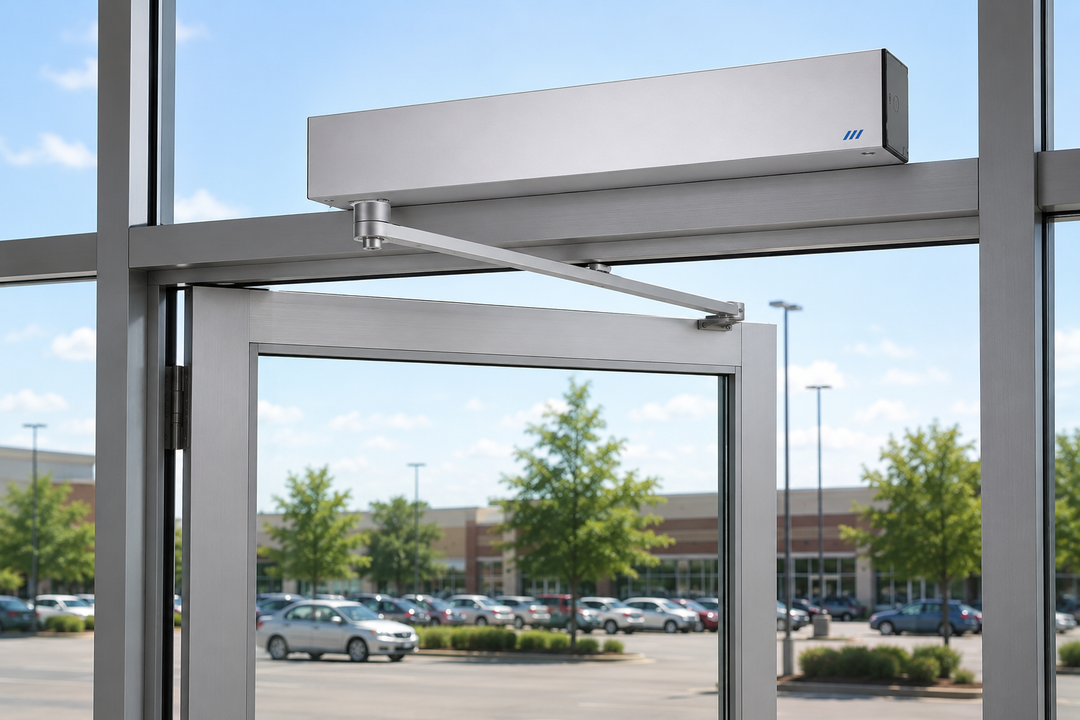
Door closers must provide sufficient time for individuals with disabilities to safely pass through the opening before the door closes. You can also add a presence sensor that prevents the door from closing until the path is clear.
Automatic Door Operators
In many facilities, automatic door openers provide the most accessible solution. Power-assisted and fully automatic door systems help eliminate barriers for wheelchair users, seniors, and individuals with limited mobility.
Automatic door operators are commonly installed in:
- Healthcare facilities
- Schools and universities
- Churches
- Government buildings
- Retail stores
- Apartment and condominium common areas
- Commercial office buildings
Why ADA Door Compliance Matters
Accessible doors help create safer, more welcoming environments for everyone. Properly designed entrances improve independence, reduce liability risks, and help facilities comply with federal accessibility requirements.
Whether upgrading an existing entrance or designing a new facility, understanding ADA door requirements is an important step toward creating a truly accessible building.
For assistance selecting ADA-compliant door openers and accessibility solutions, contact CareProdx at 800-413-3302.
ADA requirements for doors, (ADA door clearance) consists of an opening with a minimum of 32 inches clearance and a maximum of 48 inches clearance. The clearance is measured from door stop to door stop. The door itself when opened must be at 90 degrees to the opening and must not reduce the clearance.
ADA threshold requirements are that the threshold not exceed 3/4".
Even though these ADA guidelines do not apply to residential housing these ADA measurements are a good guideline for your home disability remodeling plans. It is also good to be aware that Handicap Door Openers are not required by ADA Standards but are a great addition to accessibility. We offer a line of Light Commercial Handicap Door Openers to fit most needs.
Door Opener Actuators (ADA Door Buttons) should be a minimum of 34" above the floor and a maximum of 48" above the floor.
Latest News

Tax Breaks for ADA Commercial Door Openers: What Business Owners Should Know
Tax Breaks for ADA Commercial Door Openers: What Business Owners Should Know Adding an automatic doo...

HOW TO MAKE YOUR SHOWER HANDICAP ACCESSIBLE
Aging in place or accommodating mobility challenges doesn't mean sacrificing comfort or independence...

How Much Does an ADA Automatic Door Opener Cost? Equipment, Installation and Options Explained.
$3200 will cover the cost of equipment and labor for a basic door operator with two wall mounted but...
PVC Shower Chairs: A Practical Guide to Choosing the Right Chair
PVC Shower Chairs: A Practical Guide to Choosing the Right Chair Bathing can become difficult or un...
Walk-In Tub vs. Wheelchair Accessible Shower: Which Is Right for Your Bathroom?
Short answer: if there is a good chance the person will ever use a wheelchair or rolling shower chai...
Wheelchair Accessible Showers: What to Look For Before You Buy or Remodel
If you're planning a bathroom for someone who uses a wheelchair — a parent, a spouse, yourself — the...