

How to Keep Water Inside a Walk-In or Roll-In Shower: Water Stoppers, Dams, and Barriers Explained
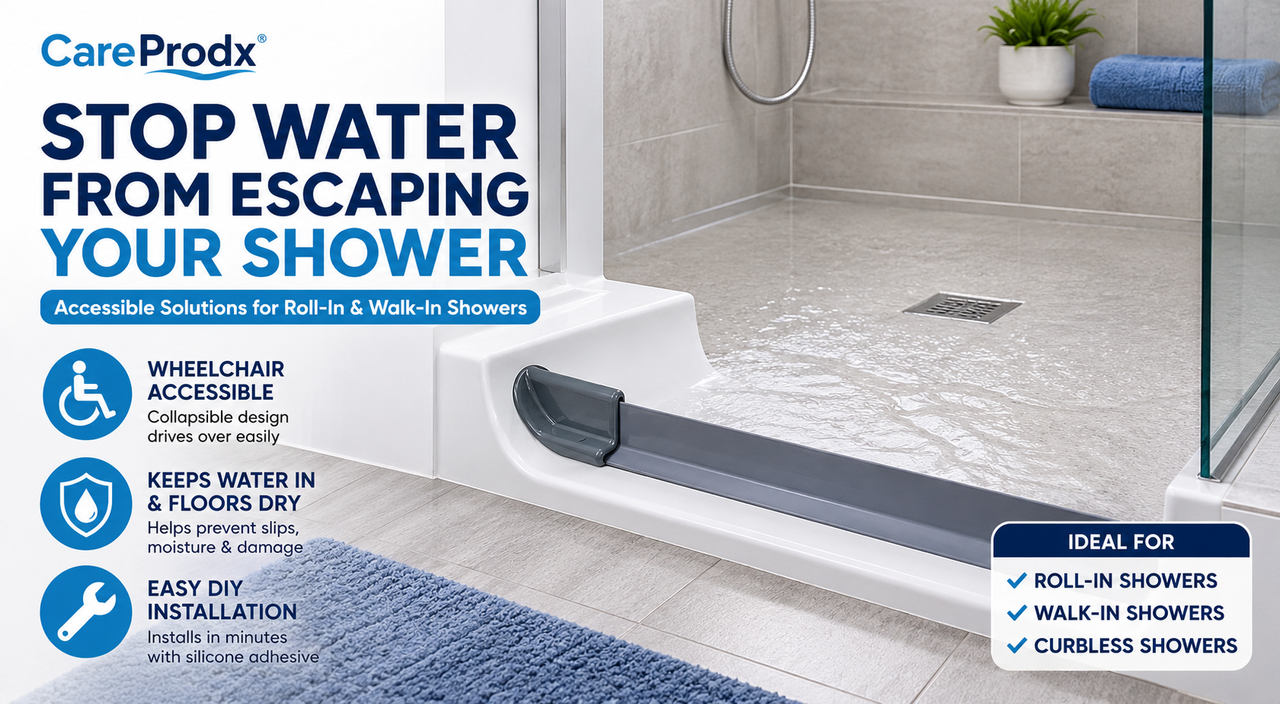
It's a common call we get here at CareProdx: "Help! The water from my accessible shower is running out onto the bathroom floor. What can I do?"
The Problem
- Curbless and roll-in showers improve accessibility.
- Without a threshold to stop it, water escaping onto the bathroom floor creates a slip hazard.
- Excess moisture can damage flooring and walls over time.
- Water stoppers solve this without a major remodel.
What Is a Shower Water Stopper?
- A flexible rubber or silicone barrier
- Mounted at the shower entrance
- Keeps water contained inside the shower
- Collapsible, so it doesn't block wheelchair or walker access
Why Water Escapes From Walk-In and Roll-In Showers
Poor Floor Slope
If the shower pan isn't sloped correctly, water isn't directed toward the drain and instead spreads toward the opening.
Wide Openings
A wider entry — needed for wheelchair access — gives water more room to spray beyond the shower area.
Curtain Gaps
Standard curtains billow and leave gaps at the sides, letting water leak around them instead of down the drain.
Wheelchair Accessibility Requirements
Roll-in showers intentionally have little or no threshold so a wheelchair can enter directly. That's exactly what makes water containment harder — there's nothing at the doorway to stop it on its own.
Water Containment Options
1. Collapsible Water Dams (The CareProdx System)
Benefits:
- Wheelchair accessible
- Compresses flat under wheels or feet
- Returns to its original shape afterward
- Easy retrofit — no remodel required
- Paired with a weighted shower curtain, keeps the whole bathroom dry
These are particularly useful in roll-in showers, where a rigid curb isn't an option.
See CareProdx Shower Water Dams
2. Fixed Silicone Water Barriers
Benefits:
- Simple installation
- Good for residential walk-in showers (not intended for wheelchair roll-over)
- Cost effective
3. Splash Guards
Installed on the sides of the shower opening, splash guards help prevent water from escaping through the corners — often the first place a standard water dam misses.
4. Linear Drains
An excellent option if you're doing new construction. A linear drain lets you slope the whole shower floor toward one edge, capturing water before it ever reaches the bathroom floor.
Are Water Stoppers ADA Compliant?
- Traditional rigid curbs can impede wheelchair access and generally aren't appropriate for roll-in showers.
- Collapsible barriers are typically preferred because they flatten under a wheelchair instead of blocking it.
- Always verify specific compliance requirements for commercial or multi-family projects with your local building authority.
Benefits of Installing a Water Dam
- Reduces slip-and-fall risk
- Keeps floors dry
- Protects flooring and drywall
- Reduces mold and mildew
- Less daily cleanup
- Inexpensive compared to a full remodel
How to Install a Shower Water Stopper
- Clean the surface thoroughly.
- Mark the installation location.
- Apply adhesive.
- Press firmly into place.
- Seal the edges with silicone.
- Allow full curing time before use.
Frequently Asked Questions
Will a water stopper block my wheelchair?
Not with a collapsible model. It flattens when rolled over and returns to shape afterward, so it contains water without recreating a curb.
How tall should a shower water dam be?
Our residential water stopper is 3/4" tall and collapsible underfoot or under a wheel — tall enough to hold back water, low enough to roll or step over.
Can I install one myself?
Yes. Most adhesive-backed models are DIY friendly and don't require a contractor.
Do water stoppers work with shower curtains?
Yes — in fact, they work best when paired with a weighted shower curtain, which keeps water from splashing over the top of the dam.
Keeping the Bathroom Dry
A properly installed water stopper can make a walk-in or roll-in shower safer, cleaner, and easier to maintain. Whether you're creating an accessible bathroom for aging in place or improving a wheelchair-accessible shower, CareProdx offers solutions that help keep water where it belongs.
Give us a call and we'll help you find the right fit for your shower.
800-413-3302
Latest News
PVC Shower Chairs: A Practical Guide to Choosing the Right Chair
PVC Shower Chairs: A Practical Guide to Choosing the Right Chair Bathing can become difficult or un...

Walk-In Tub vs. Wheelchair Accessible Shower: Which Is Right for Your Bathroom?
Short answer: if there is a good chance the person will ever use a wheelchair or rolling shower chai...
Wheelchair Accessible Showers: What to Look For Before You Buy or Remodel
If you're planning a bathroom for someone who uses a wheelchair — a parent, a spouse, yourself — the...

How Often Should Seniors Shower
If you're caring for an aging parent or loved one, you may have noticed they resist their daily show...

Do ADA Requirements Apply To Churches?
Federal ADA requirements generally do NOT apply to churches and other religious organizations. Churc...
Understanding ADA Door Openers - A Beginners Guide
Understanding ADA Door Openers - A Beginners Guide ADA-related automatic doors are split into two po...