

What Is a Wheelchair-Accessible Shower? Types, Features & Planning Tip
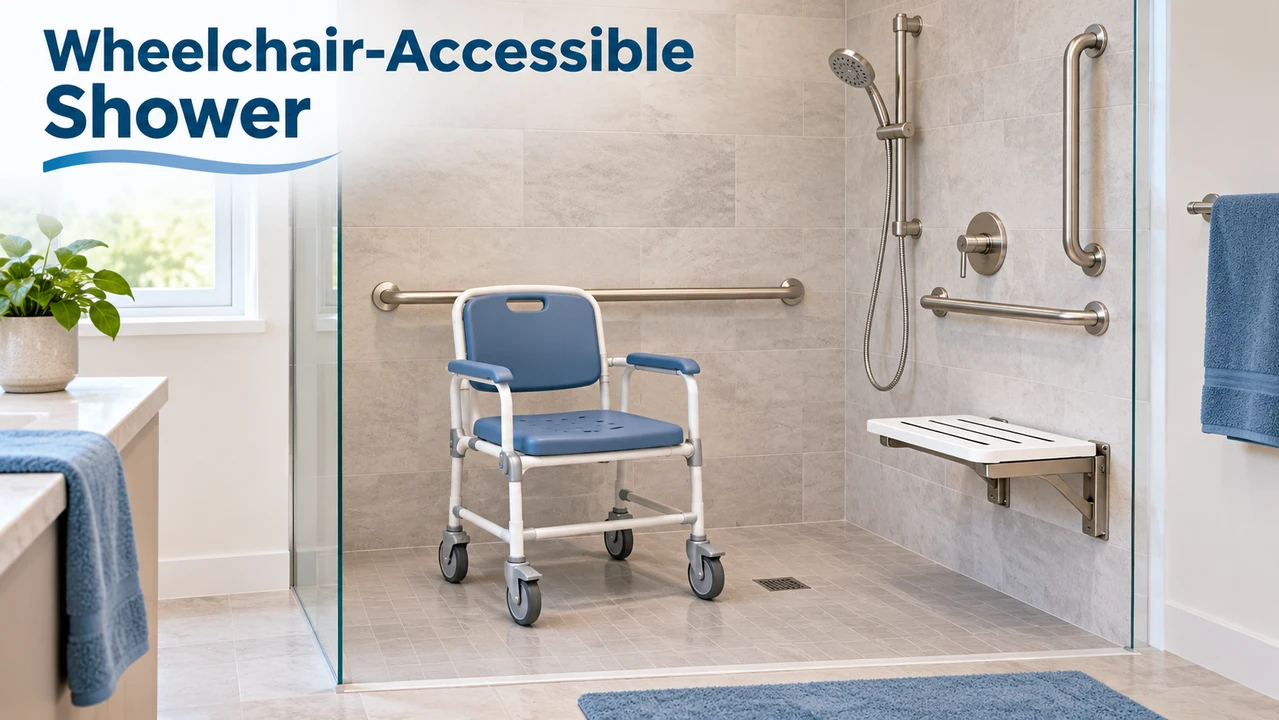
What Is a Wheelchair-Accessible Shower?
A wheelchair-accessible shower is designed so a person can enter, position themselves, and bathe with less difficulty and greater independence. Depending on the person and the bathroom, that may mean rolling into a curbless shower in a shower wheelchair, transferring from a wheelchair to a built-in seat, or using a shower chair with a low-threshold entry.
There is no single shower setup that works for everyone. The right choice depends on how the person moves, whether they transfer, who assists with bathing, and the space available in the bathroom.
What makes a shower wheelchair accessible?
Accessibility comes from the whole setup, not just the shower floor. Common features include:
-
A level or low-threshold entry: A smooth transition makes it easier to roll or step into the shower. A true roll-in shower has no curb at the entrance or a curb less than 1".
-
Enough room to enter and maneuver: The shower opening and the surrounding bathroom need to work with the person’s wheelchair or shower chair.
-
Grab bars and reachable controls: Properly placed support bars and easy-to-use controls can help with balance and bathing. Placement should match the person’s movement and the shower design.
-
A handheld shower spray: A handheld showerhead can make bathing easier while seated or when a caregiver is assisting.
-
Good water containment and drainage: The floor, drain, curtain, or enclosure must help keep water in the shower area without creating a barrier at the entrance.
A shower can include several of these features and still be difficult to use if the entry is too narrow, the seat is in the wrong place, or there is not enough clear space outside the shower.
Roll-in showers and transfer showers
Two common accessible shower designs serve different needs:
Roll-in shower
A roll-in shower has a wide, low-barrier or curbless entry. It is often chosen when a person bathes while seated in a wheeled shower chair or needs to roll into the shower area. Some designs have a fixed or folding seat; others leave room for a mobile shower chair.
What are the ADA shower dimensions?
For facilities covered by the 2010 ADA Standards, shower compartments have specific size and clearance requirements. For example, a standard roll-in compartment has a minimum clear inside size of 30 by 60 inches and a 60-inch minimum entry. A transfer-type compartment is 36 by 36 inches, with required clear floor space outside it. The standards also describe an alternate roll-in configuration.
These are technical requirements for covered facilities, and the exact requirements depend on the shower type and setting. A product labeled “accessible” is not automatically ADA-compliant as installed. For a home project, the ADA dimensions can be a useful reference, but they do not replace planning for the user’s wheelchair, transfer method, bathroom layout, local building codes, and plumbing conditions.
How to choose the right accessible shower
Before choosing a shower or shower pan, consider these questions:
-
Will the person roll into the shower by themselves or with the help of a caregiver? This helps determine whether a zero threshold or a roll-in threshold will work.
-
What mobility device will be used in the shower? Measure the shower wheelchair or chair, including its width and turning needs.
-
Who will assist with bathing? Make sure there is room for a caregiver to help safely.
-
How much room is available? Measure the bathroom, doorway, existing tub or shower opening, and the path into the bathroom.
-
Where should the seat, grab bars, and controls go? They should match the person’s reach and movement. Wall reinforcement may be needed for grab bars or a seat.
-
How will water stay in the shower? Consider the drain location, floor slope, curtain or enclosure, and how the shower will connect to the existing bathroom floor. At Careprodx our roll in and ADA showers are designed to keep the bathroom floor dry.
-
Is this a home or a public/commercial project? Public and commercial projects may have ADA requirements; residential work may also need to meet local building and plumbing codes but is generally exempt from ADA guidelines.
If you are replacing a tub or remodeling an existing bathroom, check the available dimensions and drain location before ordering. Some multi-piece showers and shower pans are designed to fit particular spaces or installation conditions, so confirming measurements early can prevent expensive changes later. At CareProdx we can likely fit your existing space, often without requiring drain relocation. Call us for assistance at 800-413-3302
Frequently asked questions
Can someone use a wheelchair inside a shower?
Yes. A person may use a shower wheelchair inside a roll-in shower. A regular wheelchair generally is not designed for wet shower use; use equipment made for bathing and confirm that its dimensions fit the shower.
Does a wheelchair-accessible shower have to be curbless?
No. Many of our showers come with a 1" "roll-in" threshold. A curbless entry is common for roll-in showers because it removes a barrier at the entrance. Whether or not the bather has a caregiver to assist makes a big difference. If personal independence is really important, a zero entry threshold is the best investment.
Is every roll-in shower ADA-compliant?
No. ADA compliance depends on the full installation, including dimensions, clearances, seat and grab bar placement, controls, and other applicable requirements. The ADA Standards apply to covered facilities; residential installations also need to follow applicable local codes.
Can I make an existing bathroom wheelchair accessible?
Often, but the options depend on the bathroom’s size, doorway, floor structure, drain location, and plumbing. A measurement-based assessment can help determine whether a shower pan, multi-piece shower, or a more extensive remodel is appropriate. We can help at CareProdx with all your redesign questions.
Find a shower that fits the space and the person
Choosing an accessible shower starts with the person’s needs and the bathroom’s measurements. Compare the entry, interior size, seat options, drain location, and installation requirements before you buy. CareProdx offers accessible shower products and components to help you plan a setup that works for your space and bathing routine. Contact our team if you need help narrowing down the options
Latest News
What Is a Wheelchair-Accessible Shower? Types, Features & Planning Tip
What Is a Wheelchair-Accessible Shower? A wheelchair-accessible shower is designed so a person can e...

Tax Breaks for ADA Commercial Door Openers: What Business Owners Should Know
Tax Breaks for ADA Commercial Door Openers: What Business Owners Should Know Adding an automatic doo...

HOW TO MAKE YOUR SHOWER HANDICAP ACCESSIBLE
Aging in place or accommodating mobility challenges doesn't mean sacrificing comfort or independence...

How Much Does an ADA Automatic Door Opener Cost? Equipment, Installation and Options Explained.
$3200 will cover the cost of equipment and labor for a basic door operator with two wall mounted but...
PVC Shower Chairs: A Practical Guide to Choosing the Right Chair
PVC Shower Chairs: A Practical Guide to Choosing the Right Chair Bathing can become difficult or un...
Walk-In Tub vs. Wheelchair Accessible Shower: Which Is Right for Your Bathroom?
Short answer: if there is a good chance the person will ever use a wheelchair or rolling shower chai...